
Advocate Tolegen Shaikov · Astana · all of Kazakhstan
Debt Collection Across Kazakhstan
I recover money owed under loans, IOUs, supply, construction, lease and service contracts. Demand letters, notarial enforcement orders, court orders, lawsuits, freezing of the debtor’s accounts and assets, and support of enforcement proceedings until the money is actually paid.
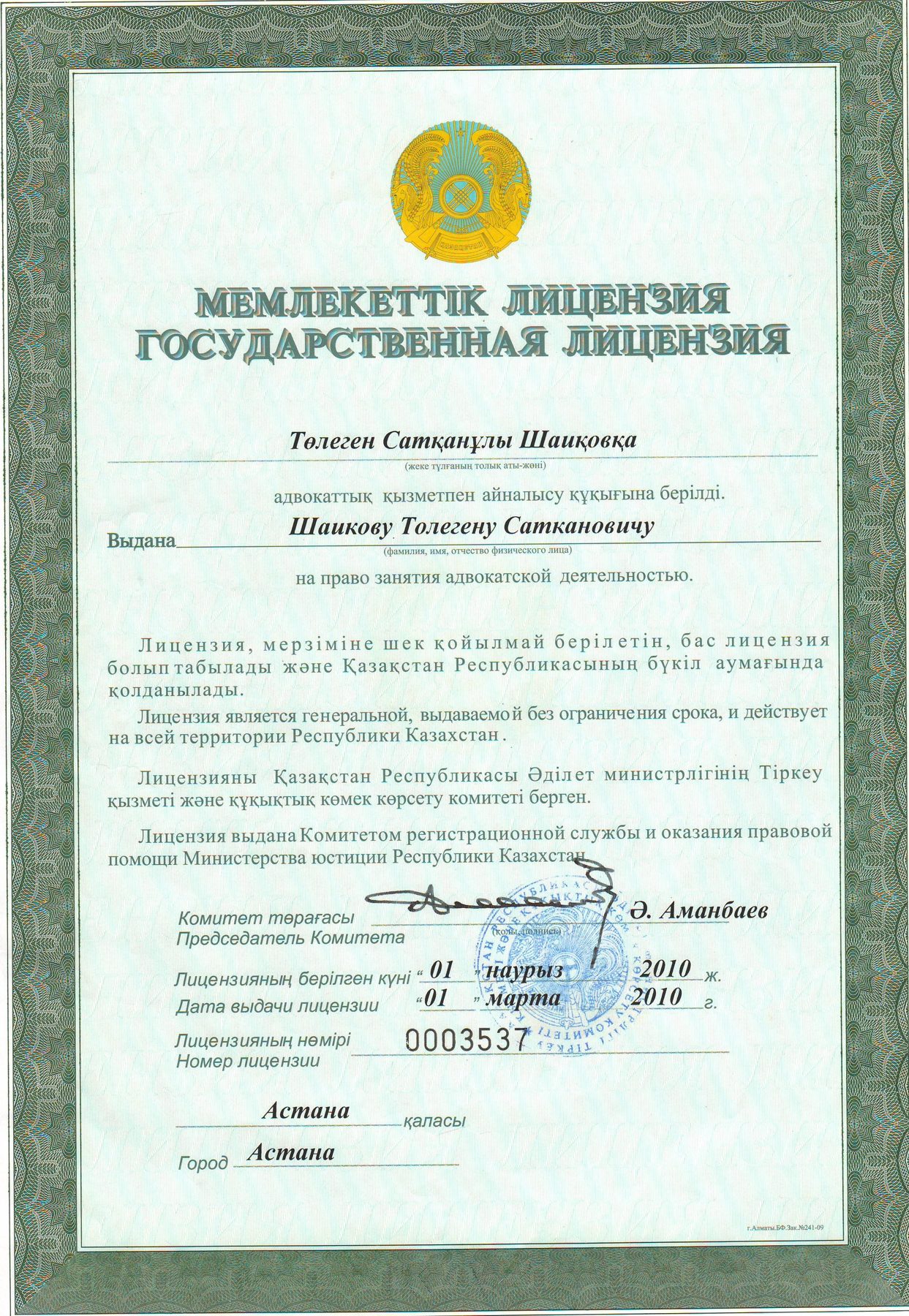
Advocate licence No. 0003537 of 01.03.2010 · Member of the Astana City Bar Association · In practice since 2010
Debts I recover
Debts under business contracts and agreements
Debts under supply, construction, service, lease, loan and other contracts between companies and entrepreneurs. Unpaid deliveries and works, unsigned acceptance certificates, overdue payments.
Recovering money you paid to Kazakhstan
Did you pay a Kazakh company or entrepreneur for goods, works or services but did not receive what the contract promised? I will help you get your money back: demand letter, lawsuit in a Kazakh court, freezing of the seller’s accounts and assets, enforcement of the judgment.
How debt recovery works
- Review of your documents and assessment of the debtor: 500 USD. I check the evidence of the debt, the limitation period, and the debtor’s assets, accounts and income. I give an honest assessment before any work begins and provide you with a written opinion on the prospects of recovery.
- Contract. If you agree, we sign a service contract. The fee is 3 to 10 percent of the amount owed, payable upfront. In addition, you pay the state court fee: 3 percent of the debt amount.
- Lawsuit and asset freeze. I do all the work myself and keep you informed with reports along the way. I prepare the claim and apply for interim measures: freezing the defendant’s bank accounts and assets so they cannot be moved. I represent you at every court level.
- Enforcement. I oversee enforcement of the judgment and work with the private bailiff until it is fully executed.
Fee calculator
| Document review and written opinion | 500 USD |
| Fee (3-10% of the debt) | |
| State court fee (3%) | |
| Total |
The exact fee percentage is set after the document review. The fee and court fee are paid only if you decide to proceed after the opinion.
For foreign clients
- You do not need to come to Kazakhstan: all work is done remotely.
- The power of attorney is signed before a notary in your country with an apostille or consular legalization. I will send you the ready text.
- Payment in US dollars by bank transfer under a written contract.
- Progress reports and copies of all documents by email and WhatsApp.
- A Kazakh court judgment is enforced in Kazakhstan: recovery is levied on the debtor’s accounts and assets here.
What can be recovered beyond the principal
- Contractual or statutory penalties.
- Interest for the use of another’s money under Article 353 of the Civil Code of Kazakhstan, where the contract sets no penalty.
- Losses caused by non-performance of the obligation.
- Legal costs: state duty and the cost of legal representation within the limits set by the Civil Procedure Code.
Why work with me
Since 2010
Licensed advocate, member of the Astana City Bar Association. Civil and criminal practice at all court levels.
All of Kazakhstan
I work throughout the Republic of Kazakhstan and travel to other regions when needed. A debtor in another city is not a problem.
Personal and contractual
I handle your case personally, without passing it to assistants. The fee and terms are fixed in the contract before work begins.
Portfolio: court decisions in my cases · Letters of recommendation
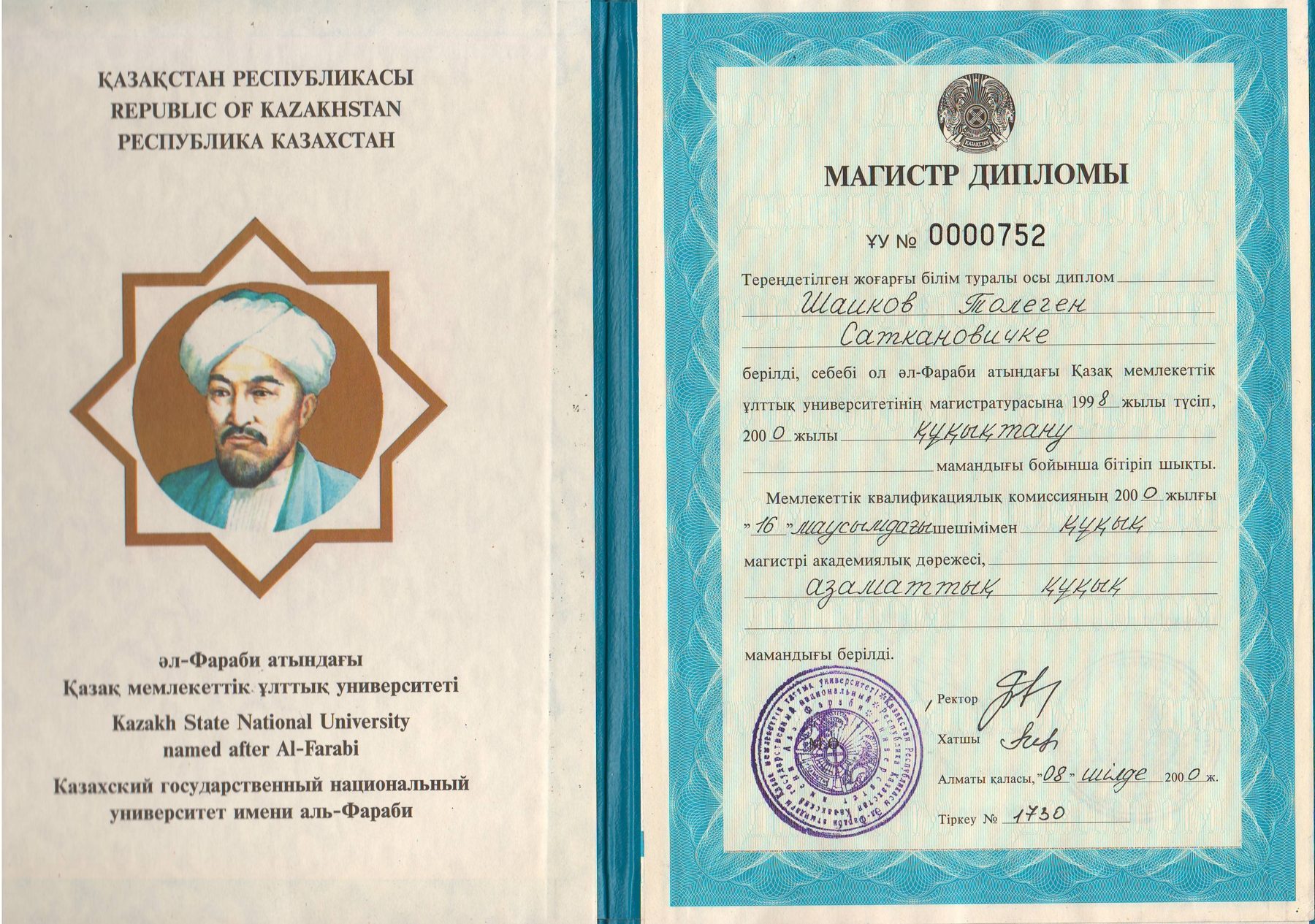
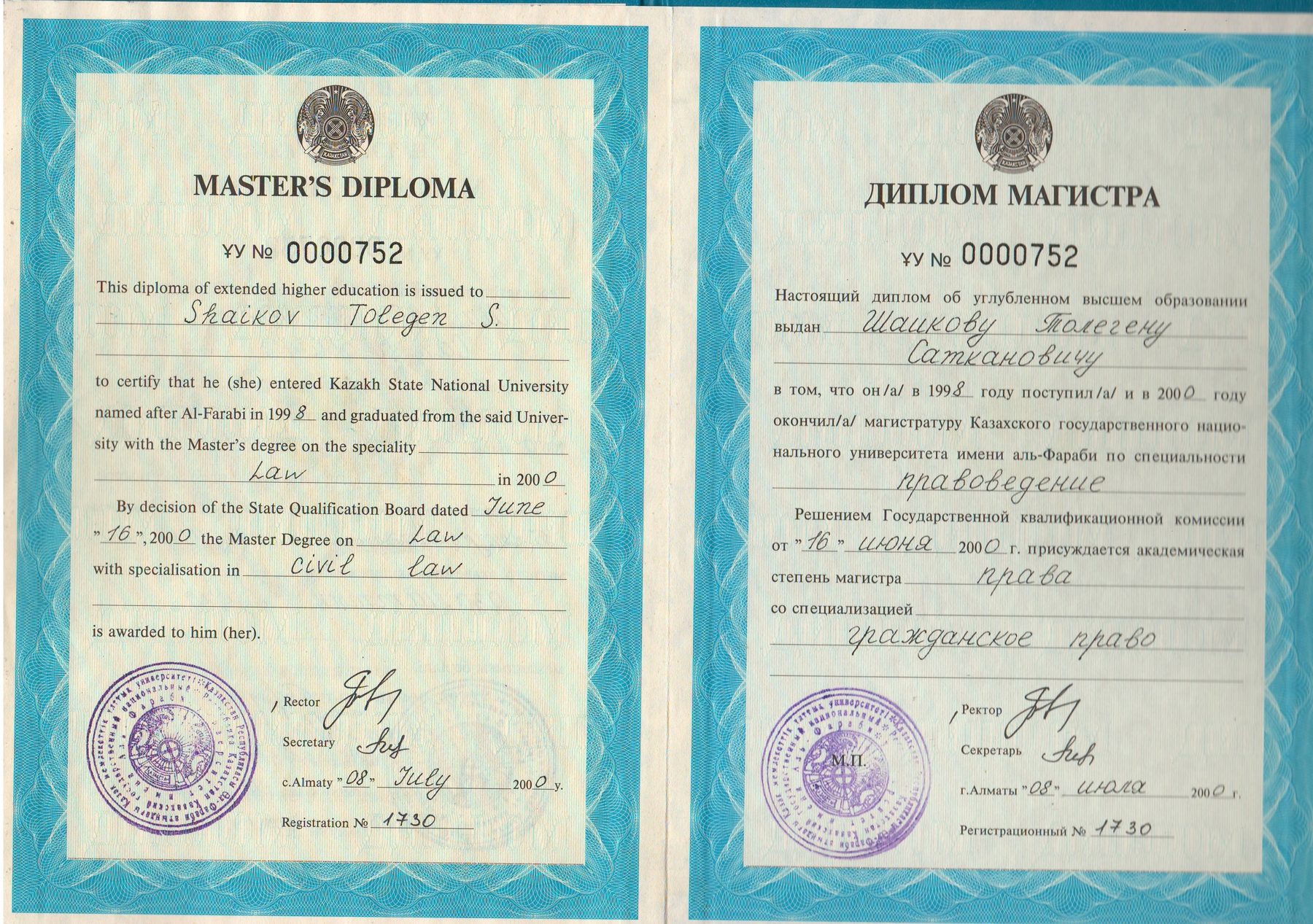
Licence and education
Frequently asked questions
How much does debt collection cost?
Review of documents and a written opinion on the prospects of recovery: 500 USD. Handling the case: 3 to 10 percent of the amount owed, payable upfront when the contract is signed. The state court fee is paid separately: 3 percent of the debt amount.
What is the limitation period for debts?
The general limitation period in Kazakhstan is three years (Article 178 of the Civil Code). It runs from the day the creditor learned or should have learned of the violation, for example the date the debt was due. Certain actions by the debtor interrupt the period.
Can I recover money without an IOU?
Often, yes. Evidence includes bank transfers, messenger correspondence, audio recordings and acknowledgement of the debt by the debtor. Where the written form of a transaction was not observed, witness testimony is generally not admissible, so written evidence is what matters.
How long does recovery take?
A notarial enforcement order or a court order takes from a few days to a few weeks. A lawsuit is usually heard at first instance within two months, excluding appeals. Enforcement time depends on the debtor’s assets.
What if the debtor has no assets?
The bailiff searches for accounts, property and income, and execution is levied on salary and incoming payments. Until the debt is paid, the debtor may be temporarily barred from leaving the country. I assess the prospects in advance so that you do not waste money.
The debtor lives in another city. Will you take the case?
Yes. I work throughout Kazakhstan: claims and motions are filed electronically, and hearings can be attended by video link.
Useful articles
- How to Recover a Debt from a Kazakh Company: A Step-by-Step Guide for Foreign Creditors
- Your Kazakh Supplier Took a Prepayment and Did Not Ship: How to Get Your Money Back
- Enforcing a Court Judgment in Kazakhstan: What a Private Bailiff Does and How to Speed Up Recovery
- Limitation Period for Debts in Kazakhstan: Three Years and What Interrupts It
Send your documents and I will assess your prospects
Send the contract, IOU or correspondence with the debtor on WhatsApp with a short description of the situation.
Phone / WhatsApp: +7 701 555 96 48
Phone: +7 777 222 26 52
E-mail: shaikov.t@gmail.com
Office: Astana. I work throughout Kazakhstan.